Introduction
When a cardiac arrest occurs, seconds matter. A disorganized response wastes those seconds and reduces the patient’s chance of survival. The resuscitation triangle offers a structured framework that transforms chaos into coordinated action. It assigns clear roles, streamlines communication, and keeps the entire team focused on what matters most.
Healthcare providers who understand this framework respond with greater confidence and efficiency. Whether in a hospital, clinic, or pre-hospital setting, the triangle helps teams function as a single, unified unit. Studies published in Resuscitation confirm that structured team roles during CPR are directly linked to improved patient outcomes. Learning this model is not just academic — it is a clinical necessity.
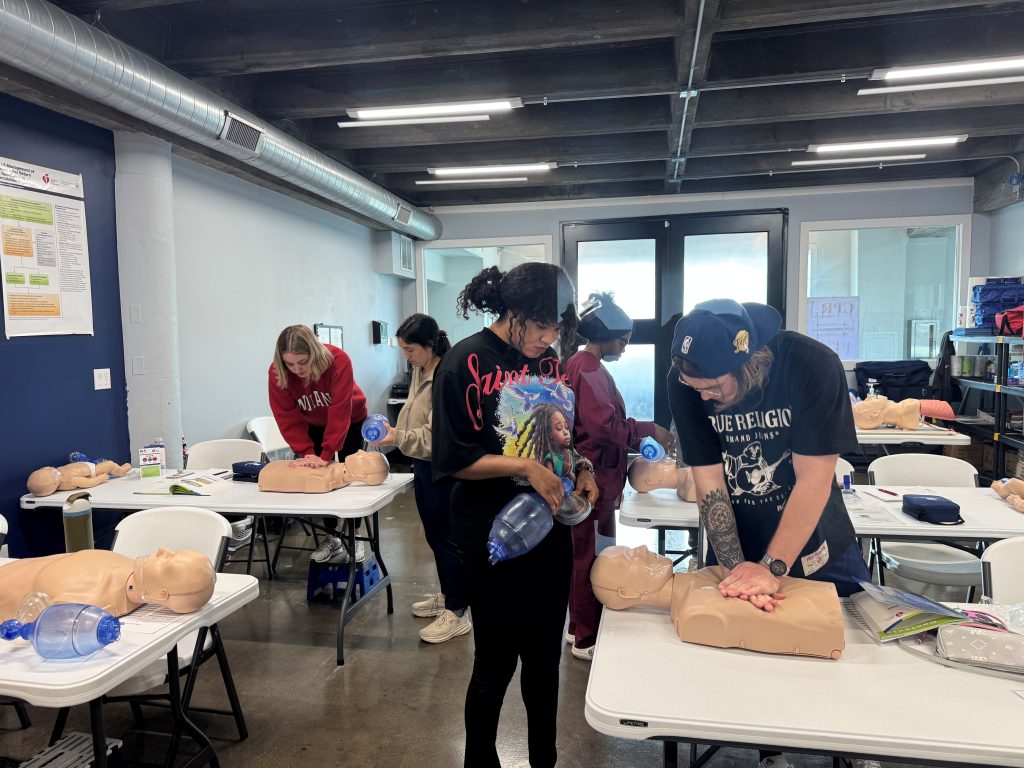
What Is the Resuscitation Triangle?
The resuscitation triangle is a role-based model used during cardiac arrest and other resuscitation events. It divides the response team into three defined positions, each carrying specific responsibilities. This structure is endorsed by the American Heart Association (AHA) and embedded within Advanced Cardiovascular Life Support (ACLS) and Pediatric Advanced Life Support (PALS) training programs.
The model emerged from research showing that unclear roles during resuscitation lead to errors, delays, and task duplication. When every provider knows their position, the team works more efficiently and with fewer mistakes. The triangle is not a rigid hierarchy — it is a flexible system that adapts to team size and clinical environment. Its core purpose is to ensure that no critical task is missed or duplicated during a high-pressure event.
What Are the Parts of the Resuscitation Triangle?
The three positions in the resuscitation triangle are the compressor, the airway manager, and the team leader. Each role is distinct, but all three must function together to achieve an effective resuscitation.
The Compressor
The compressor performs chest compressions and is arguably the most physically demanding role on the team. High-quality compressions must be delivered at a rate of 100 to 120 per minute with a depth of at least two inches for adults. According to the AHA, compression fatigue sets in within two minutes, causing a measurable decline in quality. For this reason, the compressor role is rotated every two minutes when team size allows.
Key responsibilities of the compressor include:
- Maintaining proper hand placement on the lower half of the sternum
- Allowing full chest recoil between compressions
- Minimizing interruptions to less than 10 seconds
- Communicating fatigue to the team leader before quality declines
The Airway Manager
The airway manager is responsible for maintaining a patent airway and delivering effective ventilation. This provider uses a bag-mask device, advanced airway adjuncts, or endotracheal intubation depending on the clinical scenario and their scope of practice. Proper oxygenation is critical, as hypoxia accelerates cellular damage during cardiac arrest.
Key responsibilities of the airway manager include:
- Positioning the patient’s head and jaw for optimal airflow
- Delivering one breath every six seconds once an advanced airway is placed
- Monitoring chest rise to confirm ventilation effectiveness
- Coordinating with the compressor to avoid simultaneous pauses when possible
The Team Leader
The team leader directs the entire resuscitation effort without performing hands-on tasks unless absolutely necessary. This role requires a broad situational awareness, strong communication skills, and rapid clinical decision-making. The AHA emphasizes that effective team leadership is one of the strongest predictors of resuscitation success.
Key responsibilities of the team leader include:
- Assigning roles and confirming each member understands their task
- Calling for rhythm checks and directing defibrillation when indicated
- Managing medication administration and timing
- Conducting closed-loop communication to reduce errors
- Monitoring overall team performance and providing real-time feedback
Benefits of Using the Resuscitation Triangle Approach
Structured resuscitation models like the triangle produce measurable improvements in clinical performance. Research published in the Journal of the American Heart Association found that teams using defined role assignments demonstrated significantly shorter no-flow time during CPR. Reduced no-flow time is directly associated with better return of spontaneous circulation (ROSC) rates.
The triangle also reduces cognitive load on individual providers. During a code, each team member is managing stress, monitoring equipment, and processing clinical data simultaneously. When roles are pre-assigned, cognitive resources can be directed toward execution rather than coordination. This allows faster, more accurate responses at every stage of the resuscitation.
Communication errors are significantly reduced when the triangle framework is applied. Closed-loop communication — where orders are repeated back and confirmed — becomes easier when everyone understands their role. This practice reduces the risk of missed medications, skipped rhythm checks, or delayed defibrillation. In high-stakes environments, these small improvements can mean the difference between life and death.
The resuscitation triangle also supports learners and less experienced providers. New team members benefit from a clear role with defined expectations rather than an open-ended directive to help. This scaffolding builds clinical confidence and competence over time.
Implementing the Resuscitation Triangle in Your Practice
Implementing the resuscitation triangle begins before an emergency ever occurs. Teams that rehearse role assignments through simulation perform better during real events. The AHA recommends regular code team drills as a core component of resuscitation readiness in healthcare facilities. Even brief tabletop exercises reinforce role familiarity and communication patterns.
Role assignment should happen at the start of every resuscitation attempt, not after compressions have already begun. The team leader is responsible for initiating this assignment quickly and clearly. A simple verbal declaration — “You’re on compressions, you manage the airway, I’ll lead” — takes fewer than five seconds and sets the entire response on course. This single habit prevents the confusion that derails poorly organized teams.
Facilities should also integrate the triangle into their onboarding and continuing education programs. Staff who are trained on this model early internalize it as standard practice. Regular review sessions reinforce the framework and allow teams to address gaps identified during actual resuscitation events. Debriefings after every code are strongly encouraged by the AHA and provide actionable data for continuous improvement.
Documentation of roles and performance metrics during resuscitation events supports quality improvement efforts. Hospitals and EMS systems that track this data consistently identify patterns that lead to targeted training interventions. Measuring performance closes the loop between training and real-world application.
Common Mistakes to Avoid
Even trained teams can fall into predictable errors during resuscitation. Awareness of these mistakes helps teams correct them before they affect patient outcomes.
Role confusion or overlap occurs when team members are not clearly assigned before compressions begin. Two providers may attempt the same task while another critical task goes unaddressed. Clear verbal assignment at the outset prevents this from occurring.
Compressor fatigue without rotation is a common and dangerous oversight. Tired compressions lose depth and rate, directly reducing perfusion pressure. Teams must track time and rotate the compressor proactively rather than waiting for quality to decline.
Poor closed-loop communication leads to missed or misunderstood orders. When the team leader gives a directive, it must be acknowledged verbally by the intended recipient and confirmed once completed. Without this loop, critical steps may be skipped.
Team leader involvement in hands-on tasks undermines situational awareness. When the leader steps in to perform compressions or manage the airway, they lose their overview of the entire resuscitation. This role must be protected whenever staffing allows.
Neglecting real-time feedback reduces team performance over time. The team leader should provide concise, calm corrections during the event rather than saving all feedback for the debrief. Early correction prevents compounding errors.
FAQs
Q1: What are the three sides of the Resuscitation Triangle? The three sides are the Compressor, the Airway Manager, and the AED/Monitor/Defibrillator Operator. These three team members create a triangular formation around the patient that enables rapid, efficient care during a cardiac arrest.
Q2: Why is the Resuscitation Triangle important during CPR? Unlike single-rescuer CPR, where one person juggles chest compressions and ventilations, the triangle approach distributes these critical tasks, allowing each rescuer to focus on a specific, high-quality intervention. This coordinated structure reduces confusion, minimizes interruptions in compressions, and significantly improves patient outcomes.
Q3: How often should the Compressor role be switched during resuscitation? Since fatigue quickly decreases compression quality, providers should switch roles every two minutes to maintain consistency. The best time for this role swap is during the rhythm analysis phase so that chest compressions are interrupted as little as possible.
Conclusion & Call to Action
Understanding the three sides of the Resuscitation Triangle — the Compressor, the Airway Manager, and the AED Operator — is what separates a chaotic emergency response from a life-saving one. When every team member knows their role, communication is clear, and transitions are seamless, patients have a far better chance of survival. This kind of coordinated, high-performance teamwork doesn’t happen by accident. It is built through proper training, hands-on practice, and certification.
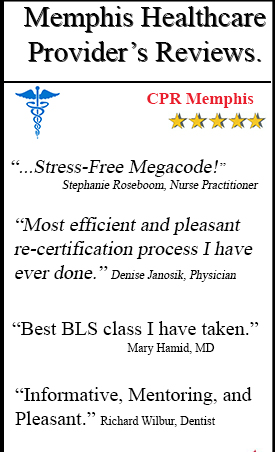
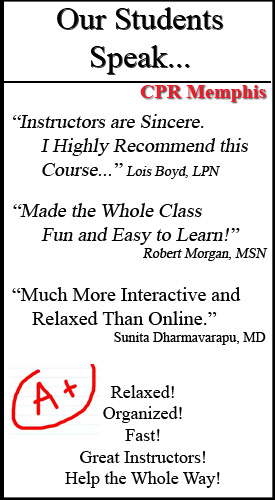
Whether you are a healthcare provider looking to sharpen your skills or a professional seeking your first certification, CPR Memphis is here to help. As an American Heart Association training site, we offer stress-free, hands-on classes designed to build your confidence and competency. Register today for a CPR certification class in Memphis to master the foundational skills every rescuer needs, or sign up for a PALS class in Memphis to learn how to apply the Resuscitation Triangle roles specifically in pediatric emergencies. Your training today could save a life tomorrow.